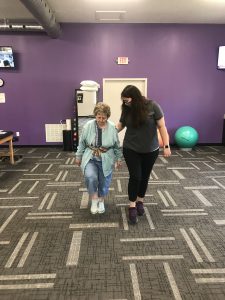
Physical therapy after a surgery is a very important step in the process of becoming pain free and getting back to all the activities that a patient possibly can. Post-surgical therapy can start the same day of the surgery or several days after. The start date of the therapy is often determined by the type of surgery and the physician that performs it. After an evaluation and a plan of care that is set up per the individual patient’s needs the real work can begin! Therapy after surgery initially consists of decreasing the pain and swelling, improving tissue healing and recovery, and improving the patient’s range of motion and mobility. As these things improve, we work on improving strength, stability, and overall function. The speed and prognosis of therapy depends on the type of surgery that was performed. Several research studies have shown that after a surgery physical therapy helps to improve the speed of the initial recovery and the overall prognosis of the recovery process.
This Blog has been supplied by the PPS section of the APTA:
You may have heard about people who got a COVID-19 infection and have symptoms for weeks or months after. This is now referred to as Long COVID. In this post we’re going to dive into what Long COVID is, what the symptoms are and who it affects. Next month we’ll talk about strategies that are helping people with Long COVID and where physical therapy fits in. Let’s get started.
What is Long COVID?
Long COVID is generally defined as ongoing signs or symptoms lasting 12 weeks or more after a COVID-19 infection.
What is it like?
Like all things COVID-19, we don’t fully understand Long COVID and new information is being discovered all the time. Long COVID tends to involve more than one system and currently has a list of over 200 possible symptoms. The most common are:
Fatigue
Post-exertional symptom exacerbation (PESE)
Problems with memory or concentration, often referred to as “brain fog”
Other common symptoms are shortness or breath, chest pain or tightness, insomnia, muscle or joint pain, depression/anxiety, and stomach problems like stomach aches, loss of appetite or diarrhea.
What’s the fatigue like? Does rest help?
Long COVID fatigue is an extreme exhaustion that isn’t relieved by rest or sleep. It’s not fatigue after some physically demanding task. People experience exhaustion for no obvious reason. The fatigue is so severe that it impacts the ability to complete daily tasks.
What about this PESE thing?
Post-exertional symptom exacerbation is a disabling and often delayed exhaustion disproportionate to the effort made. Patients are referring to this as a “crash”. PESE is very common in people suffering from Long COVID. 75% of people who have Long COVID have PESE after 6 months. The activity that brings on the crash is something that the person could easily tolerate before their COVID-19 infection. Things like taking a shower, walking, attending a social activity, or even being in a high sensory environment with flashing lights and loud noises may all now trigger a crash.
Who does Long COVID affect?
This is difficult to answer. We still don’t understand what causes some people to have symptoms long after their initial infection. What we do know is that about 25% of people who get COVID have symptoms that last at least a month. Around 10% of the people who get the virus will experience Long COVID. Long COVID isn’t related to how severe your initial symptoms were, or if you were hospitalized. It also doesn’t appear to be related to your previous health as it affects children and people who were previously fit and healthy.
Now that you know what Long COVID is, in our next installment we’ll talk about what’s being done for it and how physical therapy helps.
The following blog is being posted from the PPS section of the APTA:
When you think about a person going into intensive care, you probably picture someone who’s very ill and likely fighting for their life. They may be on a ventilator or other equipment that’s keeping them alive. When you’re in that situation, surviving would be a win. But what happens after these people survive? Do they recover and go back to life as it was? What’s the road to recovery look like?
Fortunately, medical advances have led to higher survival rates for people who end up in intensive care units – it’s now between 71% and 90%, which is great. But, survival is not the end goal, and getting out of the ICU is not the end of the battle. Many patients show significant losses of physical, mental and cognitive abilities after discharge. It makes sense – if you don’t use it, you lose it! This cluster of problems is called Post-Intensive Care Syndrome or PICS.
PICS is now recognized as a public health burden. Interventions against PICS need to start in the ICU. Then they need to continue after discharge.
Physical declines often include significant losses of strength, endurance, and mobility. These can lead to serious difficulty completing basic daily tasks like getting to the bathroom, preparing a meal, or walking to the mailbox. This may keep some people from returning home. For others, it means they need a caregiver to safely return to their previous setting. 50% of ICU survivors have limitations in daily activities 1 year later, so this is a serious and long-lasting problem.
Mental health is also a very real concern for ICU survivors. They show significant rates of depression – the mean is 28%. 24% of survivors have anxiety and 21% report PTSD. Again, these conditions have a real impact on the quality of life after leaving the ICU.
Last, declines in cognitive abilities are very common in ICU survivors. 77% have cognitive impairments at 3 months post-discharge and 71% have impairments 1 year out. Cognitive issues after discharge can include poor memory, slower thinking, problems making decisions, or difficulty concentrating.
Physical therapists play a significant role in the fight against PICS. PT typically begins while the patient is in ICU, focusing on getting the patient up and walking early. Patients begin a progressive exercise program as soon as it’s safe for them. We expect a rise in PICS due to the number of people who COVID-19 has put into critical care and/or on a ventilator.
While we can’t prevent every problem that critical illness causes, recognizing the losses that remain after discharge from the ICU is an important step. Physical therapists play an important role in combating the effects of PICS and helping people return to higher-quality lives.
Athletic trainers are medical professionals that are often found in a school setting and aid in the diagnosis and treatment of various acute and chronic conditions. Their goal is help athletes prepare and perform to their fullest potential. ATCs can use their tools for assessment, athletic contest preparation, and injury management.
Physical therapists are medical professionals that are found in a variety of settings, including the outpatient clinics at Witte Physical Therapy. Our therapists work with our ATCs to ensure that the student athletes get complete care. Together they form a healthcare team that can help with injury prevention, prehab, athletic preparation, injury and post surgical rehab.
Witte Physical Therapy is proud to offer sports medicine and athletic training services to our many partners. Through our network of athletic trainers, we can provide game and event coverage to ensure that all athletes get first class and efficient treatment during their events. We partner with several local high schools to provide as needed to full time athletic training services. Those student athletes we treat are then followed up on by our therapists to ensure that their medical needs are being met. Our PTs also provide free consultations in the clinic, or in some cases at the athlete’s school, to ensure that the athlete is being taken care of in the most appropriate way possible. Both services are free for our student athletes and gives them a well-rounded medical team that is focused on providing them with the proper care that they need. If they need a referral for care outside of the athletic training and physical therapy realms, we will work to get them the care that they need with the proper provider to get them back on the field faster!
Lumbar strains are injuries to the paraspinal muscle group that are found throughout your lower back. These strains can be mild, moderate, or severe and are characterized by the amount of trauma caused to the muscle. Low back pain can be caused by these strains, an issue to one of the lumbar discs, a spinal nerve injury, or an abnormal joint issue.
Information on what causes them?
Lumbar strains can be caused by a variety of issues. Falls, moving too fast or incorrectly, improper lifting technique, lifting something that is too heavy, car accidents, work accidents, are just a few ways these can occur. Low back pain can by caused by any of these issues and can affect a number of structures in your lumbar spine.
The signs and symptoms?
The signs and symptoms of these issues are acute and sudden pain, swelling, inability to stand up straight or correctly, inability to bear weight without compensation, altered gait mechanics, popping, clicking, decreased motion and flexibility, muscle spasms, decreased power, and strength, are just a few to name.
Treatment?
Physical therapy will initially focus on the decreasing and eliminating the pain and swelling. Once these are under control or eliminated, we will then work on improving the healing of the affected bone, ligament, tendon, muscle, nerve, disc, or other soft tissue. This could include modalities and exercises to improve the healing process. We will then work on regaining the motion and strength needed to return you back to where you were before the injury. Finally, a comprehensive home program will be set up to make sure you have the tools you need to maintain your gains and avoid this injury again in the future.
Expectations?
At your first visit you should expect a physical therapist that is there to get to know you, your current complaints, and your goals. Using this information and the information they gather during their evaluation they will set up an individualized treatment plan that will help you reach your goals and get back to your life faster. Treatments could include modalities for pain control, manual therapy to help with muscle, soft tissue, and joint healing, and exercises to restore motion and strength. As these improve we will work on improving your overall function to return you back to your normal life.
Mobility disorders are any disorder that cause abnormal movement patterns or abilities creating dysfunction for you in your daily life. These disorders can make it hard to do simple tasks such as getting dressed or cooking a meal or affect larger tasks such as going to the grocery store or being able to perform you normal work activities.
Information on what causes them?
Mobility disorders can be caused by a variety of factors. Pain, weakness, tendon or ligament abnormalities or disruption, cardiovascular deficits, neuromuscular deficits, or advanced age are just a few reasons that our mobility may become negatively affected.
The signs and symptoms?
The signs and symptoms of these issues could be acute and sudden pain, swelling, inability to bear weight without compensation, altered gait mechanics, hesitation with movement, lack of balance and proprioception, decreased motion and flexibility, decreased power, and strength, are just a few to name.
Treatment?
Physical therapy will initially focus on finding the cause of the mobility disorder. We will then work to start correcting the cause to fix the mobility dysfunction. Treatment for these disorders can range from improving ROM and strength to working on balance and proprioception to improving coordination among the musculoskeletal, neuromuscular, and cardiovascular systems. The goal is to get you back to doing what you need and want to be doing, help you meet your goals, and to get you set up on a comprehensive home exercise program to at least maintain the gains you have already made in physical therapy.
Expectations?
At your first visit you should expect a physical therapist that is there to get to know you, your current complaints, and your goals. Using this information and the information they gather during their evaluation they will set up an individualized treatment plan that will help you reach your goals and get back to your life faster. Treatments could include modalities for pain control, manual therapy to help with muscle, soft tissue, and joint healing, and exercises to restore motion and strength.
Issues with strength are defined as anything that causes your strength to be less than it should be. This could be a decrease in strength, a lack of coordination of strength, or the inability to fully utilize your strength.
Information on what causes them?
Strength issues and deficits can be caused by a variety of factors. These include a muscle injury, inflammation, a nerve injury or deficit, or larger issues such as central nervous system disorders such as Multiple Sclerosis, Guillain-Barre, or Parkinson’s.
The signs and symptoms?
The signs and symptoms of these issues could be many different things. When looking at why we have strength deficits the signs and symptoms could be weakness, pain, swelling, numbness, tingling, lack of endurance or energy, just a few to name.
Treatment?
Physical therapy will initially focus on the decreasing and eliminating any pain and swelling that may be present. Once these are under control or eliminated, we will then work on improving any range of motion issues. Next, basic strengthening will begin, and these steps will be based what caused your strength deficits to start and how you are progressing with your physical therapy program. The final stage will be working on your functional strength and stability and this will be based what your needs and goals are and what needs to be done to reach your maximum potential. Finally, a comprehensive home program will be set up to make sure you have the tools you need to maintain your gains and avoid this injury again in the future.
Expectations?
At your first visit you should expect a physical therapist that is there to get to know you, your current complaints, and your goals. Using this information and the information they gather during their evaluation they will set up an individualized treatment plan that will help you reach your goals and get back to your life faster. Treatments could include modalities for pain control, manual therapy to help with muscle, soft tissue, and joint healing, and exercises to restore motion and strength.
Foot pain is often caused by a ligament, tendon, or bone issue. A foot sprain is an injury a ligamentous structure of the foot. We often think of spraining the bottom of our foot or the top of our midfoot. A foot strain is an injury to a tendon. We often think of the Achilles, peroneals, or posterior tib tendons in this area of the body as being most often strained. A bony foot injury is often a fracture and usually to one of our metatarsals.
Information on what causes them?
Pain is caused by sprain or strain to the ligaments or tendons of our feet when they are overstretched, partially torn, or ruptured. Bony issues such as arthritis within the joints of the foot, or a fracture of one of the many bones found in the foot can be a cause of the pain. Foot injuries and pain are often caused by a traumatic event causing one of the above issues, a biomechanical issue affecting how we move, or several smaller issues that may or may need physical therapy to address them.
The signs and symptoms?
The signs and symptoms of these issues are acute and sudden pain, swelling, inability to bear weight without compensation, altered gait mechanics, popping, clicking, decreased motion and flexibility, decreased power, and strength, are just a few to name.
Treatment?
Physical therapy will initially focus on the decreasing and eliminating the pain and swelling. Once these are under control or eliminated, we will then work on improving the healing of the affected bone or soft tissue. This could include modalities and exercises to improve the healing process and working on regaining the motion and strength needed to return you back to where you were before the injury. Finally, a comprehensive home program will be set up to make sure you have the tools you need to maintain your gains and avoid this injury again in the future.
Expectations?
At your first visit you should expect a physical therapist that is there to get to know you, your current complaints, and your goals. Using this information and the information they gather during their evaluation they will set up an individualized treatment plan that will help you reach your goals and get back to your life faster. Treatments could include modalities for pain control, manual therapy to help with muscle, soft tissue, and joint healing, and exercises to restore motion and strength.
Gait abnormalities can be a number of things that cause you to have a gait issue that is not normal. The could be defined as a limp, a “dead leg”, or dragging of your foot to name a few. Gait abnormalities account for nearly one in five falls in older adults.
Information on what causes them?
These abnormalities can be caused by a variety of issues. They could be an injury to muscle, bone, ligament or tendon. They could be an injury to some part of the nervous system. They could be from an issue that was present at birth, such as cerebral palsy or club foot, or a newly diagnosed condition later in life, such as multiple sclerosis or Parkinson’s disease.
The signs and symptoms?
The signs and symptoms of these issues could include pain, swelling, inability to bear weight without compensation, popping, clicking, decreased motion and flexibility, decreased power, and strength, decreased sensation, burning or tingling are just a few to name.
Treatment?
Physical therapy will initially focus on analyzing your gait pattern and working to determine what the cause of your gait abnormality is. Some gait issues are fixable by addressing the system that is causing the issue. Some gait issues are correctable by using compensatory patterns or assistive devices to make your gait more efficient and safer. Some gait issues are not correctable but can be made safer for you to get around in your home or community with the help of a physical therapist. Physical therapists are movement experts and can help you improve your quality of movement and quality of life.
Expectations?
At your first visit you should expect a physical therapist that is there to get to know you, your current complaints, and your goals. Using this information and the information they gather during their evaluation they will set up an individualized treatment plan that will help you reach your goals and get back to your life faster. Treatments could include modalities for pain control, manual therapy to help with muscle, soft tissue, and joint healing, and exercises to restore motion and strength all aimed at addressing your gait abnormalities and ultimately the goals that you define that are important to you.
Motor Vehicle Accidents (MVA) and Injuries occur during a car crash. These injuries can range from whiplash to low back pain to a broken bone. These are just a few of the wide range of examples and severities that can come from an MVA.
Information on what causes them?
The cause of these injuries can be just as varying as the injuries themselves. You can be injured from your own body’s reaction to seeing the crash coming. You can be injured from the sudden deceleration of the vehicle. You can be injured from the impact causing something to hit you inside the car.
The signs and symptoms?
The signs and symptoms of these issues are acute and sudden pain, swelling, inability to bear weight without compensation, altered gait mechanics, popping, clicking, decreased motion and flexibility, decreased power, and strength, are just a few to name.
Treatment?
Physical therapy will initially focus on the decreasing and eliminating the pain and swelling. Once these are under control or eliminated, we will then work on improving the healing of the affected bone or soft tissue. This could include modalities and exercises to improve the healing process and working on regaining the motion and strength needed to return you back to where you were before the injury. Once your strength has improved, we will work on balance and stability in order to restore function and return you back to the activities you were doing before the accident. Finally, a comprehensive home program will be set up to make sure you have the tools you need to maintain your gains and avoid this injury again in the future.
Expectations?
At your first visit you should expect a physical therapist that is there to get to know you, your current complaints, and your goals. Using this information and the information they gather during their evaluation they will set up an individualized treatment plan that will help you reach your goals and get back to your life faster. Treatments could include modalities for pain control, manual therapy to help with muscle, soft tissue, and joint healing, and exercises to restore motion and strength.