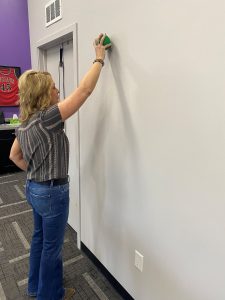
Your shoulder is one of the most mobile — and complex — joints in your body. It allows you to reach overhead, lift, carry, throw, push, pull, and perform countless daily tasks. But because of this remarkable mobility, the shoulder is also especially vulnerable to pain, stiffness, weakness, and injury.
If you’ve noticed difficulty reaching into cabinets, putting on a jacket, sleeping comfortably, or returning to workouts or sports, physical therapy can play a key role in restoring your shoulder function and preventing long-term problems.
Why Shoulder Problems Are So Common
The shoulder isn’t just one joint — it’s a coordinated system of:
The shoulder blade (scapula)
The upper arm bone (humerus)
The collarbone (clavicle)
A network of muscles, tendons, and ligaments (including the rotator cuff)
For the shoulder to work well, all of these parts must move together in a precise way. When one part becomes weak, tight, inflamed, or poorly coordinated, pain and dysfunction quickly follow.
Common shoulder issues treated in physical therapy include:
Rotator cuff strains or tears
Shoulder impingement
Frozen shoulder (adhesive capsulitis)
Tendinitis and bursitis
Labral injuries
Postural-related shoulder pain
Post-surgical rehabilitation
Signs Your Shoulder Function Needs Help
You may benefit from physical therapy if you experience:
Pain when reaching overhead or behind your back
Weakness when lifting objects
Clicking, catching, or pinching sensations
Limited range of motion
Difficulty sleeping on the affected side
Ongoing stiffness that doesn’t improve with rest
Ignoring these signs often leads to compensation patterns, where you begin using your neck, back, or opposite shoulder in ways that create additional problems.
How Physical Therapy Restores Shoulder Function
Physical therapy doesn’t just treat the pain — it addresses the underlying cause of the dysfunction.
Restoring Mobility
Many shoulder problems start with stiffness in the joint or surrounding muscles. Your physical therapist uses targeted stretching, joint mobilization, and guided movement to restore normal range of motion safely.
Strengthening the Right Muscles
Weakness in the rotator cuff and shoulder blade muscles is a major contributor to shoulder pain. Therapy focuses on strengthening these key stabilizers so your shoulder moves efficiently and without irritation.
Improving Shoulder Blade Mechanics
Most people don’t realize how important the shoulder blade is. Poor posture, prolonged desk work, and rounded shoulders disrupt normal movement patterns. Physical therapy retrains proper shoulder blade positioning and movement.
Correcting Posture and Movement Patterns
Therapists identify faulty movement habits that overload the shoulder. By retraining posture and daily movement patterns, you reduce stress on the joint and prevent recurrence.
Reducing Inflammation and Pain
Hands-on techniques, therapeutic exercises, and modalities help calm irritated tissues and promote healing.
What to Expect in Physical Therapy
Your plan of care is individualized based on your specific diagnosis, lifestyle, and goals. Sessions often include:
Hands-on treatment
Guided exercises
Education on posture and activity modification
A home exercise program to accelerate recovery
As mobility improves and strength builds, you’ll notice everyday activities becoming easier and less painful.
Whether you want to get back to sports, lift weights, garden, sleep comfortably, or simply reach overhead without discomfort, physical therapy helps restore the shoulder’s natural mechanics so you can move confidently again.
The earlier you address shoulder issues, the faster and more complete your recovery is likely to be.
Shoulder pain rarely resolves on its own when movement dysfunction is involved. If you’re noticing persistent pain, stiffness, or weakness, a physical therapist can help you identify the cause and create a plan to get you back to full function.
Your shoulder was designed to move — physical therapy helps make sure it can.
When people think of occupational therapy (OT), they often picture help with physical tasks like dressing, cooking, or returning to work after an injury. But occupational therapy also plays a powerful role in supporting cognitive health. Cognitive concerns can affect daily life just as much as physical limitations—and OT is uniquely designed to help people function better in real-world situations.
What Are Cognitive Concerns?
Cognition refers to the mental processes we use to think, learn, remember, and make decisions. Cognitive concerns can show up in many ways, including difficulties with:
Memory
Attention and concentration
Problem-solving
Planning and organization
Processing speed
Safety awareness
Emotional regulation
These challenges may result from conditions such as concussion, stroke, traumatic brain injury, neurological disorders, aging, long COVID, mental health conditions, or even high stress and fatigue.
How Occupational Therapy Addresses Cognitive Challenges
Occupational therapists focus on helping people do the things that matter most to them—at home, at work, and in the community. Rather than treating cognition in isolation, OT looks at how cognitive concerns impact daily life and finds practical solutions.
Here’s how OT can help:
Improving Memory and Recall
OTs work with individuals to develop strategies that support memory, such as:
Using calendars, planners, or smartphone reminders
Creating structured routines
Breaking tasks into manageable steps
Practicing memory techniques that fit real-life activities
These tools help people stay organized and confident throughout the day.
Enhancing Attention and Focus
Difficulty concentrating can make everyday tasks overwhelming. Occupational therapy can help by:
Teaching strategies to reduce distractions
Building tolerance for sustained attention
Modifying environments to support focus
Gradually increasing task complexity
This is especially helpful for students, working adults, and individuals recovering from brain injury.
Supporting Executive Functioning
Executive functions include planning, organizing, time management, and decision-making. OT interventions may include:
Developing systems for task planning and prioritization
Practicing real-world problem-solving scenarios
Learning strategies to manage time and meet deadlines
These skills are essential for independence at home and success at work or school.
Promoting Safety and Awareness
Cognitive changes can increase the risk of accidents. Occupational therapists assess safety and help with:
Identifying potential hazards at home or work
Teaching strategies to improve judgment and awareness
Recommending adaptive tools or environmental modifications
This ensures individuals can function more safely and confidently.
Supporting Emotional and Mental Well-Being
Cognitive challenges often come with frustration, anxiety, or decreased confidence. OT addresses the whole person by:
Teaching coping strategies and stress management techniques
Helping individuals rebuild confidence through meaningful activities
Encouraging healthy routines that support brain health
A Functional, Personalized Approach
One of the biggest strengths of occupational therapy is its individualized approach. Therapy is based on what the person wants or needs to do—whether that’s managing medications, returning to work, keeping up with family responsibilities, or maintaining independence at home.
Rather than focusing only on what’s “impaired,” occupational therapy emphasizes strengths, adaptation, and participation.
When to Consider Occupational Therapy
Occupational therapy may be beneficial if you or a loved one is experiencing:
Difficulty managing daily tasks due to memory or attention issues
Challenges returning to work or school after injury or illness
Increased forgetfulness or disorganization affecting independence
Cognitive changes impacting safety or confidence
Cognitive concerns don’t have to limit quality of life. Occupational therapy provides practical tools, strategies, and support to help individuals navigate daily challenges and stay engaged in the activities that matter most.
If cognitive changes are affecting everyday life, occupational therapy may be an important step toward greater independence and confidence.
We’re all familiar with the yearly routine: the dental cleaning, the eye exam, the standard physical with your primary care doctor, the rush to get your taxes to the accountant.
We check our teeth, our vision, and our bloodwork, but we often ignore the very thing that carries us through the world: how we move.
You might not notice the small loss of hip mobility or the slight decline in balance until it shows up as a mysterious back ache or a stumble on the pickleball court.
An annual Physical Therapy Check-up is designed to catch these small issues before they become major injuries.
What Does a PT Check-up Look Like?
Your PT will look at your health history and basic mobility. But they’ll also listen to any concerns you might have, and make sure that your current levels match your lifestyle goals. A visit might include:
A Wearable Data Review: Do you track your steps, readiness scores, or VO2 max on an Apple Watch, Oura, or Whoop? We can help translate that data into a physical plan.
The Longevity Trifecta: An assessment of your grip strength, balance, and power, three of the most significant predictors of how well you will age.
Movement Goals: Whether you’re training for a Hyrox event, trying to keep up with your grandkids, or just want to sit at your desk without neck pain, we’ll make sure your plan matches your goals.
Customized Pre-hab: An efficient home exercise program designed to work on any trouble spots and move you towards you goal.
Moving Well is the Ultimate Biohack
The latest research continues to confirm that movement isn’t just about fitness, it’s a vital sign for your entire internal system. Here are three key benchmarks we look at:
1. The Sitting-Rising Test (SRT)
Can you sit down on the floor and get back up without using your hands or knees for support? This simple test is a viral sensation for a reason: studies show it is a remarkably accurate predictor of all-cause mortality. It requires flexibility, core stability, and leg strength that come together as a quick measure of your functional mobility.
2. Gait Speed: Your “Sixth Vital Sign”
How fast you walk (gait velocity) is a window into your central nervous system. If you can maintain a walking speed of over 1.0 meter per second, you are significantly more likely to maintain independence as you age and stay out of the hospital. We’ll get a precise measurement to make sure you aren’t slowing down without realizing it.
3. Grip Strength
Newer evidence has shown that grip strength is a great proxy for overall muscle mass and biological age. A decline in grip can be an early warning sign of strength or muscle loss.
Prevention is the New Performance
In a world obsessed with longevity and “optimization,” the most effective tool we have is proactive maintenance.
You wouldn’t wait for your car’s engine to smoke before changing the oil, don’t wait for a in injury before you check in with your PT.
Ready to audit your movement? Let’s make 2026 your strongest year yet.
Waking up with a stiff neck or developing neck tightness after a long day at work is incredibly common. Whether it’s caused by poor posture, stress, overuse, or sleeping in an awkward position, neck stiffness can interfere with daily activities like driving, working, or even turning your head comfortably. The good news is that physical therapy can be a highly effective solution for reducing pain, restoring movement, and preventing future neck issues.
Common Causes of a Stiff Neck
A stiff neck often develops due to muscle tension or joint restriction. Some of the most common causes include:
Poor posture, especially prolonged sitting or phone use
Muscle strain from sudden movements or overuse
Stress-related muscle tightness
Sleeping positions that don’t support the neck
Previous injury, such as whiplash
When left untreated, stiffness can worsen and lead to headaches, shoulder pain, or decreased mobility.
How Physical Therapy Addresses Neck Stiffness
Physical therapy focuses on treating the root cause of stiffness rather than just masking the symptoms. A physical therapist will perform a thorough evaluation to assess posture, range of motion, strength, and movement patterns.
1. Manual Therapy to Improve Mobility
Hands-on techniques such as joint mobilization and soft tissue massage help reduce muscle tension and improve joint movement. These techniques can quickly decrease pain and restore normal neck motion.
2. Targeted Stretching and Strengthening
Tight muscles and weak supporting muscles often go hand in hand. Physical therapy includes:
Gentle stretches to improve flexibility
Strengthening exercises for the neck, shoulders, and upper back
Postural exercises to support proper alignment
These exercises help relieve stiffness while improving long-term neck stability.
3. Posture and Ergonomic Education
Poor posture is one of the leading contributors to neck stiffness. Physical therapists provide guidance on:
Proper desk and workstation setup
Phone and screen positioning
Sleeping posture and pillow recommendations
Small changes in daily habits can make a big difference in reducing neck strain.
4. Pain Relief Modalities
Depending on your needs, your therapist may use treatments such as heat, ice, electrical stimulation, or dry needling to help reduce pain and muscle guarding, making it easier to move comfortably.
5. Preventing Future Neck Pain
One of the biggest benefits of physical therapy is prevention. By addressing movement patterns, posture, and muscle imbalances, physical therapy helps reduce the likelihood of recurring neck stiffness and chronic pain.
When to Seek Physical Therapy
If neck stiffness lasts more than a few days, limits your movement, or is accompanied by headaches, arm pain, or tingling, it may be time to see a physical therapist. Early intervention often leads to faster recovery and better outcomes.
A stiff neck doesn’t have to slow you down. Physical therapy offers a safe, effective, and personalized approach to relieving pain, restoring mobility, and keeping your neck healthy long-term.
Physical therapy continues to evolve as new, evidence-based treatments emerge to help patients recover faster and move with less pain. One increasingly popular modality is shockwave therapy, a non-invasive treatment that can be highly effective for certain musculoskeletal conditions. But what exactly is shockwave therapy, and how does it fit into a physical therapy plan of care?
What Is Shockwave Therapy?
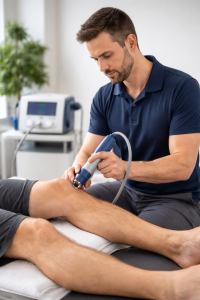
Shockwave therapy, also known as Extracorporeal Shockwave Therapy (ESWT), uses high-energy sound waves delivered to targeted areas of the body. These sound waves stimulate biological responses in injured tissues, promoting healing at a cellular level.
Unlike ultrasound or electrical stimulation, shockwave therapy creates controlled microtrauma in the tissue. This process jumpstarts the body’s natural healing mechanisms, increasing blood flow, reducing inflammation, and encouraging tissue regeneration.
How Shockwave Therapy Works
When shockwaves are applied to injured tissue, they help:
Increase circulation and nutrient delivery
Break down calcifications and scar tissue
Stimulate collagen production
Reduce pain by altering pain signal transmission
The result is improved tissue healing and function, particularly in chronic conditions that have been slow to respond to traditional treatments.
Conditions Commonly Treated With Shockwave Therapy
Shockwave therapy is often used in physical therapy to treat chronic tendon and soft tissue conditions, including:
Plantar fasciitis
Achilles tendinopathy
Tennis elbow (lateral epicondylitis)
Patellar tendinopathy
Rotator cuff tendinopathy
Hip pain and calcific tendinitis
It is especially helpful for patients who have had persistent pain for months despite rest, exercise, and other conservative treatments.
What to Expect During Treatment
Shockwave therapy sessions are typically brief, lasting 5–15 minutes per area treated. During the session, a therapist applies a handheld device to the skin using a conductive gel. Patients may feel mild to moderate discomfort, but treatment intensity can be adjusted to tolerance.
Most patients require 3–6 sessions, spaced about one week apart. Because the therapy stimulates healing rather than providing instant relief, improvement often occurs gradually over several weeks.
Benefits of Shockwave Therapy in Physical Therapy
Shockwave therapy offers several advantages:
Non-invasive with no downtime
Can reduce the need for injections or surgery
Targets chronic pain conditions effectively
Complements exercise-based rehabilitation
Promotes long-term healing rather than short-term symptom relief
When combined with strengthening, mobility work, and movement retraining, shockwave therapy can accelerate recovery and improve outcomes.
Is Shockwave Therapy Right for Everyone?
While shockwave therapy is safe for most patients, it may not be appropriate for individuals who are pregnant, have bleeding disorders, nerve or vascular conditions near the treatment area, or certain implanted medical devices. A licensed physical therapist will evaluate each patient to determine if shockwave therapy is an appropriate option.
The Role of Shockwave Therapy in a Comprehensive Treatment Plan
Shockwave therapy is not a stand-alone cure, but rather a powerful adjunct to physical therapy. It works best when paired with targeted exercises, activity modification, and patient education. By addressing both the symptoms and the underlying movement impairments, physical therapists can help patients achieve lasting relief and improved function.
Shockwave therapy has become a valuable tool in modern physical therapy, particularly for stubborn, chronic conditions that have not responded to traditional care. As research continues to support its effectiveness, more clinics are incorporating shockwave therapy into comprehensive rehabilitation programs designed to get patients back to moving comfortably and confidently.
If you’ve been dealing with ongoing pain or limited mobility, a physical therapist can help determine whether shockwave therapy could be part of your recovery plan.
Every January, gyms fill up, motivation runs high, and ambitious fitness resolutions take center stage. Yet by February, many of those goals quietly fade. The problem usually isn’t lack of motivation—it’s setting goals that are unrealistic, overwhelming, or unsustainable.
This year, instead of chasing perfection, focus on attainable fitness resolutions that fit your lifestyle and support long-term success.
Start With Your “Why”
Before setting a goal, ask yourself why you want to improve your fitness. Is it to have more energy? Reduce pain? Improve mental health? Keep up with your kids? Goals rooted in personal meaning are easier to stick with than ones driven by appearance alone.
When your “why” is clear, your goals become more intentional—and more achievable.
Set Small, Specific Goals
Vague goals like “get in shape” or “work out more” are hard to follow. Instead, aim for goals that are specific and measurable.
For example:
“Walk for 20 minutes, three times per week”
“Strength train twice a week”
“Stretch for 5 minutes after workouts”
Small goals create quick wins, which build confidence and momentum over time.
Focus on Consistency Over Intensity
You don’t need to work out every day or push yourself to exhaustion to see results. Consistency matters far more than intensity.
A moderate routine you can maintain year-round will outperform an extreme plan you abandon after a few weeks. Choose activities you enjoy and can realistically fit into your schedule.
Build Fitness Into Your Daily Life
Fitness doesn’t have to happen exclusively in the gym. Look for ways to move more throughout your day:
Take the stairs instead of the elevator
Go for short walks during breaks
Do bodyweight exercises while watching TV
Stretch before bed
When movement becomes part of your routine, it feels less like a chore and more like a habit.
Plan for Obstacles
Life gets busy, schedules change, and motivation fluctuates. Instead of letting setbacks derail your progress, plan for them ahead of time.
Ask yourself:
What will I do if I miss a workout?
How can I stay active during busy weeks?
What’s my backup plan?
Flexibility keeps you moving forward—even when things don’t go perfectly.
Track Progress Beyond the Scale
While weight can be one measure of progress, it’s far from the only one. Pay attention to:
Increased strength or endurance
Improved mood and energy levels
Better sleep
Reduced pain or stiffness
Celebrating these non-scale victories helps reinforce the positive impact of your efforts.
Give Yourself Grace
Progress isn’t linear. There will be weeks when you do more—and weeks when you do less. That’s normal. The key is not giving up after a setback.
Fitness is a long-term commitment, not a 30-day challenge. Showing up imperfectly is far better than not showing up at all.
Attainable fitness resolutions aren’t about doing everything—they’re about doing what works for you. By setting realistic goals, prioritizing consistency, and allowing flexibility, you can create a fitness routine that lasts far beyond January.
This year, aim for progress, not perfection. Your future self will thank you.
As Christmas approaches, the pace of the clinic shifts. Appointments are squeezed between shopping trips, holiday parties, and family gatherings. There’s festive music playing softly in the background, a few candy canes on the front desk, and patients wishing each other happy holidays in the gym. Amid all of this, I find myself pausing more often—reflecting on what it truly means to be a physical therapist and feeling deeply thankful for this profession, especially at Christmas.
As physical therapists, we’re invited into some of the most vulnerable moments of people’s lives. We meet patients after surgeries, injuries, diagnoses, and setbacks they never planned for. During the holidays, those challenges can feel heavier. Pain doesn’t pause for Christmas, and recovery timelines don’t adjust for family traditions. I’m thankful that my work allows me to walk alongside people during these moments, offering not just treatment, but reassurance, hope, and progress when it’s needed most.
Christmas is a season of small miracles, and in physical therapy, we witness them every day. A patient taking their first steps without a walker. Someone finally sleeping through the night without pain. A return to work, sport, or simply playing on the floor with grandkids again. These wins may not come wrapped in bows, but they are powerful reminders of why this work matters. I’m grateful to be part of these quiet victories that change lives.
I’m also thankful for the relationships that grow in the clinic. Physical therapy isn’t rushed care—it’s built on time, trust, and consistency. Over weeks or months, patients become familiar faces with stories, families, and goals we come to know well. Around Christmas, those connections feel even more meaningful. Conversations drift toward traditions, memories, and hopes for the new year, reminding me that healing is never just physical—it’s deeply human.
This season also brings gratitude for the team I work alongside. Physical therapists, occupational therapists, physical therapy assistants, athletic trainers, and front office staff show up every day with compassion and dedication, even when schedules are full and energy is stretched thin. Healthcare can be demanding, but the holidays highlight how much stronger we are when we support one another. I’m thankful for coworkers who share the load, celebrate progress, and keep patient care at the center of everything we do.
Most of all, Christmas reminds me why gratitude is essential in this profession. Progress isn’t always linear. Outcomes aren’t always perfect. But there is always something to be thankful for—a patient’s effort, a moment of trust, a shared laugh, or the privilege of helping someone move better and live fuller.
As the year comes to a close, I carry a deep sense of appreciation for my patients, my colleagues, and the calling of physical therapy itself. Being a physical therapist at Christmas is a reminder that healing, hope, and gratitude are gifts we can give—and receive—every single day.
Wishing you a season filled with warmth, restoration, and gratitude.
The holidays are a wonderful time, but they can also bring extra stress, packed schedules, and an endless stream of parties and to-dos. It’s easy to let your normal exercise routine slide and feel the tension build up, especially in your neck and shoulders.
The good news? You don’t need an hour at the gym to feel better.
Physical therapy is all about practical, small changes that make a big difference in how your body handles stress. Here are simple tips to help you stay active and manage muscle tension during the busiest time of the year.
Keep Moving: Quick-Hit Activity Tips
Your regular routine might be impossible right now, but some movement is always better than none. Consistency is key for both your physical and mental well-being.
Take a 10-Minute Movement Break: Set a timer and walk briskly, do some squats, or march in place. Do this a few times a day. It breaks up long periods of sitting and gives you a burst of energy.
Park and Walk: Choose the parking spot furthest away from the store entrance. Those extra steps add up, especially when holiday shopping.
Active Socializing: Suggest a post-meal walk after a holiday dinner instead of immediately sitting down. This aids digestion and gets your family moving together.
Sneak in Strength: Do calf raises while waiting in line or while brushing your teeth. Perform standing squats while waiting for water to boil in your kitchen.
Managing Stress-Related Muscle Tension
When stress hits, your body tenses up. A lot of people unknowingly hold that tension in thier upper back, neck, and jaw. This can lead to headaches, stiffness, and pain.
Check Your Posture: Are your shoulders hiking up toward your ears? Pull them back and down, slightly squeezing your shoulder blades together. Do this quick reset every time you stop at a red light or open your laptop.
Deep Breathing: When you feel overwhelmed, stop and take five slow, deep breaths. This simple act tells your nervous system to relax and can ease muscle tightness instantly.
Stay Hydrated: Dehydration can contribute to muscle cramps and fatigue, making you feel the stress even more. Keep a water bottle handy and sip throughout the day.
Two Quick Stretches for Instant Relief
You can do these simple, seated stretches anywhere, like in your car, at your desk, or even during a commercial break. Hold each stretch gently for 20–30 seconds.
Chin Tuck (For Neck Tension): Sit up straight and look straight ahead. Gently glide your head straight back, like you are trying to make a double chin. You should feel a slight stretch at the back of your neck. Relax and repeat 5 times.
Upper Trap Stretch (For Shoulder Tension): Sit tall and let your right arm hang loosely at your side or grab the bottom of your chair. Gently tilt your left ear toward your left shoulder until you feel a light stretch on the right side of your neck. Repeat on the other side.
When to Consult a Physical Therapist
If your stress-related tension is turning into persistent pain, limiting your ability to enjoy the holidays, or if you’re struggling to stay active due to an old injury, we can help. A physical therapist can assess your posture, identify underlying issues, and provide a personalized plan to relieve pain and keep you moving well into the New Year.
Don’t let holiday tension steal your joy. Call us today to schedule a consultation!
The holiday season brings joy, celebration, and—let’s be honest—a whole lot of delicious food. While this time of year is meant to be enjoyed, it’s also common to feel overwhelmed by the constant flow of treats, parties, and rich meals. The good news? Eating nutritiously during the holidays doesn’t mean skipping your favorite dishes or feeling restricted. With a few intentional strategies, you can savor the season while still supporting your health and your healing
Start With a Balanced Mindset
Before talking about food choices, it’s important to approach holiday eating with a mindset of balance, not perfection. Restrictive thinking (“I can’t eat that”) often backfires and leads to overeating later. Instead, focus on mindfulness and moderation—allow yourself to enjoy the foods you love, just without going into autopilot mode.
Don’t Skip Meals to “Save Up”
It may seem logical to skip breakfast or lunch before a big holiday dinner, but this usually leads to being overly hungry and overeating later. Instead, eat consistent, balanced meals throughout the day that include protein, fiber, and healthy fats. This keeps your blood sugar stable and helps you make more intentional choices when the celebration begins.
Fill Half Your Plate With Nutrient-Dense Foods
When it’s time to sit down for the big meal:
Start by filling half your plate with vegetables—think salads, green beans, roasted carrots, or sautéed Brussels sprouts.
Use the remaining half for proteins and your favorite holiday sides.
This simple strategy allows room for indulgence while ensuring you’re getting nutrients that support digestion, energy, and satiety.
Enjoy Your Favorites—Mindfully
Holiday meals are filled with once-a-year recipes that are worth enjoying. Instead of loading your plate with everything, choose the dishes you truly love. Slow down, savor each bite, and check in with your body as you eat. You’ll likely find you enjoy the food more and naturally eat less.
Hydrate (Yes, Even When You’re Busy)
Between traveling, hosting, and running errands, it’s easy to forget about hydration. Drinking water throughout the day can help with energy levels, digestion, and appetite regulation. Try alternating between water and festive beverages like cider, cocktails, or hot chocolate.
Be Strategic With Sweets and Treats
The holidays come with plenty of opportunities for sugary snacks. Instead of grazing all day:
Choose one or two treats that you genuinely enjoy.
Eat them without guilt.
Avoid keeping endless leftovers on the counter where they invite mindless snacking.
Bring a Nutritious Dish to Share
If you’re attending a potluck or gathering, bring something wholesome you enjoy—maybe a festive salad, roasted vegetables, or a protein-rich appetizer. This ensures you’ll have at least one nourishing option on the table and helps others feel supported in their goals too.
Keep Moving (Even a Little Counts!)
Staying active doesn’t have to mean hitting the gym daily during the holidays. Build in movement where you can:
Late nights and busy schedules can throw off your sleep, which impacts hunger hormones and cravings. Aim for 7–9 hours per night, and when possible, build in wind-down routines like herbal tea, screen-free time, or light reading.
Practice Grace, Not Guilt
The holidays are about connection. If you overindulge one day, let it go. Get back to your routine the next morning with a nourishing meal and movement. Consistency—not perfection—is what truly matters for long-term health.
Eating nutritiously during the holidays is all about balance, intention, and enjoyment. When you focus on nourishing your body while still celebrating traditions, you can feel great throughout the season—without sacrificing the foods and moments that matter most.
WITTE PHYSICAL THERAPY NOW OFFERS OCCUPATIONAL THERAPY SERVICES WITH EMILY ROBERTS, OTD, OTR/L!!!
When people think of rehabilitation, they often imagine regaining strength, relearning to walk, or recovering from surgery. While these are essential parts of recovery, there is another equally important aspect: the ability to engage in everyday activities with confidence and independence. This is where Occupational Therapy (OT) shines—especially in the outpatient clinical setting.
Outpatient OT bridges the gap between medical care and real-life functioning. It empowers patients to return to the roles they value most: parent, employee, student, caregiver, athlete, community member, or simply someone able to manage daily life without pain or limitation.
What Makes Outpatient Occupational Therapy Unique?
Unlike inpatient or acute care settings, outpatient OT focuses on longer-term skill development, functional independence, and maximizing participation in meaningful activities. Patients often come to outpatient clinics after an injury, surgery, illness, or due to chronic conditions that are limiting their daily functioning.
Occupational therapists assess not just the injury, but the impact that injury has on someone’s everyday life.
This setting allows for:
More personalized, goal-driven therapy sessions
Higher-frequency, targeted interventions
Real-time progress tracking and adjustments
Close collaboration with other outpatient providers like physical therapists, speech therapists, physicians, and mental health professionals
Who Benefits from Outpatient OT?
Occupational therapy supports a wide range of diagnoses, including:
Chronic pain conditions, such as arthritis or tendonitis
Neurological diagnoses, like stroke, TBI, MS, or Parkinson’s disease
Post-surgical rehabilitation for orthopedic or neurological procedures
Pediatric challenges, including sensory processing, fine-motor delays, or developmental coordination disorder
Mental health or cognitive concerns, including anxiety, ADHD, or mild cognitive impairment
Regardless of the condition, the goal remains the same: help people return to what they need and want to do.
Key Areas of Focus in Outpatient OT
1. Fine Motor and Hand Function Rehabilitation
Outpatient OT often emphasizes hand therapy. This includes improving strength, range of motion, coordination, sensation, and dexterity—skills essential for daily tasks like writing, dressing, typing, cooking, and tool use.
2. Pain Management and Joint Protection Techniques
Therapists teach strategies to reduce pain and inflammation, improve ergonomics, and prevent re-injury. Education on body mechanics and joint protection empowers patients long after therapy ends.
3. Functional Task Training
Rather than focusing on exercises alone, occupational therapists help patients practice real-life activities—from preparing meals to managing home tasks to returning to work duties.
4. Cognitive and Executive Function Support
Memory, concentration, planning, and problem-solving are crucial for everyday function. OTs provide strategies, compensatory tools, and structured cognitive rehabilitation programs.
5. Sensory Integration and Emotional Regulation
For both children and adults, sensory processing difficulties can impact learning, working, and social participation. Outpatient OT uses sensory-based interventions to support regulated, organized responses to the environment.
6. Adaptive Equipment and Home/Work Modifications
OTs evaluate and recommend tools or environmental changes—such as splints, ergonomic setups, assistive devices, or task modifications—to match the patient’s abilities and lifestyle.
How Occupational Therapists Make a Lasting Impact
Outpatient OT is about empowering patients to reclaim independence and confidence. By focusing on function, not just symptoms, occupational therapists help patients:
Return to work faster
Improve quality of life
Restore meaningful routines
Increase safety at home and in the community
Reduce long-term healthcare costs
Perhaps most importantly, occupational therapy helps people reconnect with their identity: the roles and routines that give life meaning.
The Bottom Line
Occupational therapy plays a critical and often transformative role in the outpatient clinical setting. Whether a patient is healing from injury, managing a chronic condition, or navigating the challenges of daily life, OT provides the tools, strategies, and support needed to move forward with independence and purpose.
If you or someone you know is struggling with everyday tasks or recovering from a recent medical event, an outpatient occupational therapist can be a trusted guide in the journey back to meaningful living.
When people think of rehabilitation, they often imagine regaining strength, relearning to walk, or recovering from surgery. While these are essential parts of recovery, there is another equally important aspect: the ability to engage in everyday activities with confidence and independence. This is where Occupational Therapy (OT) shines—especially in the outpatient clinical setting.
Outpatient OT bridges the gap between medical care and real-life functioning. It empowers patients to return to the roles they value most: parent, employee, student, caregiver, athlete, community member, or simply someone able to manage daily life without pain or limitation.
What Makes Outpatient Occupational Therapy Unique?
Unlike inpatient or acute care settings, outpatient OT focuses on longer-term skill development, functional independence, and maximizing participation in meaningful activities. Patients often come to outpatient clinics after an injury, surgery, illness, or due to chronic conditions that are limiting their daily functioning.
Occupational therapists assess not just the injury, but the impact that injury has on someone’s everyday life.
This setting allows for:
More personalized, goal-driven therapy sessions
Higher-frequency, targeted interventions
Real-time progress tracking and adjustments
Close collaboration with other outpatient providers like physical therapists, speech therapists, physicians, and mental health professionals
Who Benefits from Outpatient OT?
Occupational therapy supports a wide range of diagnoses, including:
Chronic pain conditions, such as arthritis or tendonitis
Neurological diagnoses, like stroke, TBI, MS, or Parkinson’s disease
Post-surgical rehabilitation for orthopedic or neurological procedures
Pediatric challenges, including sensory processing, fine-motor delays, or developmental coordination disorder
Mental health or cognitive concerns, including anxiety, ADHD, or mild cognitive impairment
Regardless of the condition, the goal remains the same: help people return to what they need and want to do.
Key Areas of Focus in Outpatient OT
1. Fine Motor and Hand Function Rehabilitation
Outpatient OT often emphasizes hand therapy. This includes improving strength, range of motion, coordination, sensation, and dexterity—skills essential for daily tasks like writing, dressing, typing, cooking, and tool use.
2. Pain Management and Joint Protection Techniques
Therapists teach strategies to reduce pain and inflammation, improve ergonomics, and prevent re-injury. Education on body mechanics and joint protection empowers patients long after therapy ends.
3. Functional Task Training
Rather than focusing on exercises alone, occupational therapists help patients practice real-life activities—from preparing meals to managing home tasks to returning to work duties.
4. Cognitive and Executive Function Support
Memory, concentration, planning, and problem-solving are crucial for everyday function. OTs provide strategies, compensatory tools, and structured cognitive rehabilitation programs.
5. Sensory Integration and Emotional Regulation
For both children and adults, sensory processing difficulties can impact learning, working, and social participation. Outpatient OT uses sensory-based interventions to support regulated, organized responses to the environment.
6. Adaptive Equipment and Home/Work Modifications
OTs evaluate and recommend tools or environmental changes—such as splints, ergonomic setups, assistive devices, or task modifications—to match the patient’s abilities and lifestyle.
How Occupational Therapists Make a Lasting Impact
Outpatient OT is about empowering patients to reclaim independence and confidence. By focusing on function, not just symptoms, occupational therapists help patients:
Return to work faster
Improve quality of life
Restore meaningful routines
Increase safety at home and in the community
Reduce long-term healthcare costs
Perhaps most importantly, occupational therapy helps people reconnect with their identity: the roles and routines that give life meaning.
The Bottom Line
Occupational therapy plays a critical and often transformative role in the outpatient clinical setting. Whether a patient is healing from injury, managing a chronic condition, or navigating the challenges of daily life, OT provides the tools, strategies, and support needed to move forward with independence and purpose.
If you or someone you know is struggling with everyday tasks or recovering from a recent medical event, an outpatient occupational therapist can be a trusted guide in the journey back to meaningful living.