
Shockwave Therapy in Physical Therapy: What It Is and How It Helps
January 6, 2026
Physical therapy continues to evolve as new, evidence-based treatments emerge to help patients recover faster and move with less pain. One increasingly popular modality is shockwave therapy, a non-invasive treatment that can be highly effective for certain musculoskeletal conditions. But what exactly is shockwave therapy, and how does it fit into a physical therapy plan of care?
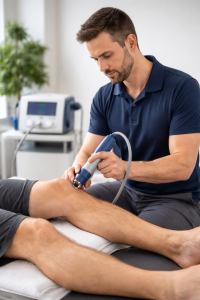
What Is Shockwave Therapy?
Shockwave therapy, also known as Extracorporeal Shockwave Therapy (ESWT), uses high-energy sound waves delivered to targeted areas of the body. These sound waves stimulate biological responses in injured tissues, promoting healing at a cellular level.
Unlike ultrasound or electrical stimulation, shockwave therapy creates controlled microtrauma in the tissue. This process jumpstarts the body’s natural healing mechanisms, increasing blood flow, reducing inflammation, and encouraging tissue regeneration.
How Shockwave Therapy Works
When shockwaves are applied to injured tissue, they help:
-
Increase circulation and nutrient delivery
-
Break down calcifications and scar tissue
-
Stimulate collagen production
-
Reduce pain by altering pain signal transmission
The result is improved tissue healing and function, particularly in chronic conditions that have been slow to respond to traditional treatments.
Conditions Commonly Treated With Shockwave Therapy
Shockwave therapy is often used in physical therapy to treat chronic tendon and soft tissue conditions, including:
-
Plantar fasciitis
-
Achilles tendinopathy
-
Tennis elbow (lateral epicondylitis)
-
Patellar tendinopathy
-
Rotator cuff tendinopathy
-
Hip pain and calcific tendinitis
It is especially helpful for patients who have had persistent pain for months despite rest, exercise, and other conservative treatments.
What to Expect During Treatment
Shockwave therapy sessions are typically brief, lasting 5–15 minutes per area treated. During the session, a therapist applies a handheld device to the skin using a conductive gel. Patients may feel mild to moderate discomfort, but treatment intensity can be adjusted to tolerance.
Most patients require 3–6 sessions, spaced about one week apart. Because the therapy stimulates healing rather than providing instant relief, improvement often occurs gradually over several weeks.
Benefits of Shockwave Therapy in Physical Therapy
Shockwave therapy offers several advantages:
-
Non-invasive with no downtime
-
Can reduce the need for injections or surgery
-
Targets chronic pain conditions effectively
-
Complements exercise-based rehabilitation
-
Promotes long-term healing rather than short-term symptom relief
When combined with strengthening, mobility work, and movement retraining, shockwave therapy can accelerate recovery and improve outcomes.
Is Shockwave Therapy Right for Everyone?
While shockwave therapy is safe for most patients, it may not be appropriate for individuals who are pregnant, have bleeding disorders, nerve or vascular conditions near the treatment area, or certain implanted medical devices. A licensed physical therapist will evaluate each patient to determine if shockwave therapy is an appropriate option.
The Role of Shockwave Therapy in a Comprehensive Treatment Plan
Shockwave therapy is not a stand-alone cure, but rather a powerful adjunct to physical therapy. It works best when paired with targeted exercises, activity modification, and patient education. By addressing both the symptoms and the underlying movement impairments, physical therapists can help patients achieve lasting relief and improved function.
Shockwave therapy has become a valuable tool in modern physical therapy, particularly for stubborn, chronic conditions that have not responded to traditional care. As research continues to support its effectiveness, more clinics are incorporating shockwave therapy into comprehensive rehabilitation programs designed to get patients back to moving comfortably and confidently.
If you’ve been dealing with ongoing pain or limited mobility, a physical therapist can help determine whether shockwave therapy could be part of your recovery plan.