
Common Youth Elbow Injuries and how Physical Therapy can help!
April 21, 2026
Youth athletes are throwing harder, training longer, and specializing earlier than ever before and their elbows are feeling it. From baseball to gymnastics to tennis, repetitive stress and high-force movements put growing joints at risk. Understanding the most common elbow injuries in young athletes and how physical therapy can help can make a big difference in both recovery and long-term performance.
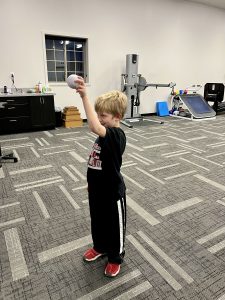
Common Youth Elbow Injuries
Little League Elbow (Medial Epicondyle Apophysitis)
This is one of the most well-known elbow injuries in youth baseball players, especially pitchers. It occurs when repetitive throwing places stress on the growth plate on the inner side of the elbow.
Symptoms:
-
Inner elbow pain during or after throwing
-
Decreased throwing velocity or control
-
Tenderness along the inner elbow
Why it happens:
In growing athletes, the growth plate is weaker than surrounding ligaments and tendons. Repetitive valgus stress (the outward force during throwing) irritates this area.
Osteochondritis Dissecans (OCD)
OCD affects the cartilage and underlying bone on the outer part of the elbow. It’s more serious and can lead to loose bone fragments in the joint.
Symptoms:
-
Outer elbow pain
-
Swelling or stiffness
-
Catching or locking sensation
Why it happens:
Repetitive compression forces—common in throwing or weight-bearing sports like gymnastics—can disrupt blood flow to the bone.
Ulnar Collateral Ligament (UCL) Sprain
While more commonly associated with adult athletes, UCL injuries are increasingly seen in youth due to overuse.
Symptoms:
-
Sharp inner elbow pain
-
Instability or “looseness” in the elbow
-
Pain with throwing, especially at high speeds
Why it happens:
Repetitive high-velocity throwing stresses the ligament that stabilizes the inner elbow.
Elbow Hyperextension Injuries
These occur when the elbow is forced beyond its normal range, often during falls or contact.
Symptoms:
-
Sudden pain after impact
-
Swelling
-
Limited range of motion
Why it happens:
Common in sports like football, basketball, and gymnastics where falls or collisions occur.
How Physical Therapy Helps
Physical therapy plays a critical role in both recovery and prevention of elbow injuries in young athletes. It’s not just about healing—it’s about building resilience.
Pain Management and Healing
Early treatment focuses on reducing inflammation and allowing the injured tissue to recover. This may include:
-
Activity modification
-
Ice and manual therapy
-
Guided rest from aggravating movements
Restoring Mobility
After injury, stiffness can limit performance and increase reinjury risk. Physical therapists use:
-
Gentle stretching
-
Joint mobilization techniques
-
Range-of-motion exercises
Strengthening the Kinetic Chain
The elbow doesn’t work alone. Weakness in the shoulder, core, or hips can increase stress on the elbow.
A good rehab program includes:
-
Shoulder stabilization exercises
-
Scapular (shoulder blade) strengthening
-
Core and lower body training
This whole-body approach reduces overload on the elbow during sport.
Improving Mechanics
Faulty throwing or movement mechanics are often a root cause of injury. Physical therapists assess and correct:
-
Throwing technique
-
Arm slot and timing
-
Body positioning during sport
This is especially important for pitchers and overhead athletes.
Gradual Return to Sport
Returning too soon is one of the biggest risk factors for reinjury. PTs guide athletes through a structured progression:
-
Step-by-step throwing programs
-
Load management strategies
-
Monitoring for symptoms
Injury Prevention Education
Perhaps the most valuable aspect preventing the next injury. This includes:
-
Pitch count guidelines
-
Proper warm-ups
-
Cross-training and rest periods
-
Avoiding early sport specialization
Youth elbow injuries are largely preventable. They often stem from overuse, poor mechanics, or inadequate recovery. The earlier these issues are addressed, the better the outcome.
Physical therapy provides young athletes with the tools they need not only to recover but to perform stronger and safer and prevent injury. With the right guidance, kids can stay in the game, build confidence, and develop lifelong healthy movement habits.