
Moving Better with Parkinson’s: How Physical Therapy Can Help
April 28, 2026
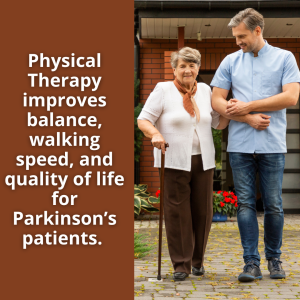
If you or a loved one is living with Parkinson’s disease (PD), you know it’s more than just a tremor. It affects how you move, balance, and carry yourself. It can also bring on less obvious symptoms like fatigue, pain, and changes in your mood or memory.
While there isn’t a cure yet, there is a powerful way to manage these symptoms and stay independent: Physical Therapy.
Why Physical Therapy?
Physical therapists are movement experts. We look at more than your diagnosis. We look at how you move through the world. Our goal is to help you maintain your mobility, safety, and confidence.
Here are five key ways PT makes a difference:
- Building Strength: PD can cause muscles to weaken over time. We use targeted resistance training to build the strength you need for daily activities.
- “Thinking Big” for Better Movement: Parkinson’s often makes movements smaller and slower (like shuffling feet or smaller handwriting). We use specialized programs, like LSVT BIG, to retrain your brain and body to use bigger, more intentional movement.
- Restoring Your Rhythm: Walking involves rhythmic movements, like swinging your arms. PD can disrupt this rhythm. Tools like ellipticals, bicycles, or even dance and Tai Chi to help your body find its rhythm again.
- Balance and Posture: PD affects the brain’s ability to process balance signals from your eyes and inner ear. We use stability challenges, like practicing on uneven surfaces or with your eyes closed to keep you steady on your feet and prevent falls.
- Managing Stiffness: Muscle rigidity is a common challenge with PD. Regular, focused stretching of the hips, hamstrings, and calves can reduce pain and keep you flexible.
The Evidence: It Really Works
Science proves that PT really helps people with Parkinson’s.
Large-scale reviews of thousands of patients have shown that physical therapy significantly improves:
- Walking
- Balance
- Coordination
- Quality of life
Take the Next Step
Living with Parkinson’s requires a proactive team. Whether you are newly diagnosed or have been managing PD for years, a physical therapist can provide the education and exercises you need to live well.
References & Further Reading
- Johns Hopkins Medicine: Physical Therapy for Parkinson’s Disease
- Parkinson’s Foundation: Physical Therapy and PD
- Parkinson’s Foundation: Physical, Occupational & Speech Therapies
- PubMed (Meta-Analysis): Physiotherapy in Parkinson’s Disease: A Meta-Analysis of Present Treatment Modalities
- PubMed (Cochrane Review): Physiotherapy versus placebo or no intervention in Parkinson’s disease