
How PRI Can Enhance Outpatient Physical Therapy: Understanding Postural Restoration
October 27, 2026
When it comes to physical therapy, treating pain is only part of the equation. Understanding why pain develops and how the body moves as a whole can help patients achieve better movement, improved function, and long-term results. One approach that has gained attention in outpatient physical therapy is Postural Restoration Institute® (PRI).
PRI focuses on how posture, breathing, muscle imbalances, and the body’s natural asymmetries influence movement and contribute to pain or limitations. When incorporated into an individualized physical therapy program, PRI-based techniques may help patients improve movement patterns, restore mobility, and return to the activities they enjoy.
What Is PRI?
The Postural Restoration Institute® (PRI) is an educational organization that provides courses and clinical concepts for healthcare professionals. Its approach recognizes that the human body is naturally asymmetrical. For example, the diaphragm, pelvis, rib cage, and surrounding musculature are not perfectly symmetrical, which can influence how we stand, breathe, walk, and perform everyday activities.
PRI-based physical therapy looks at how these patterns may contribute to movement restrictions, muscle overactivity, limited mobility, and discomfort.
Rather than focusing exclusively on the location of a patient’s pain, a physical therapist trained in PRI concepts may evaluate how different regions of the body work together. This can include examining breathing mechanics, pelvic positioning, rib cage movement, balance, and the ability to shift weight from one side of the body to the other.
The goal is to help patients develop more efficient and adaptable movement strategies while addressing their specific symptoms and functional limitations.
How Is PRI Used in Outpatient Physical Therapy?
PRI concepts can be incorporated into a comprehensive outpatient physical therapy program in several ways.
1. Improving Breathing Mechanics
Breathing plays an important role in posture, trunk stability, and movement. The diaphragm is a primary breathing muscle, but it also contributes to the body’s ability to control pressure and stabilize the trunk.
Some patients develop breathing patterns that rely heavily on accessory muscles in the neck and shoulders or have difficulty coordinating breathing with movement.
A physical therapist using PRI-informed techniques may incorporate breathing exercises designed to improve rib cage movement, encourage more effective diaphragm function, and help patients coordinate breathing with posture and activity.
These exercises may be useful as part of rehabilitation for patients with certain movement limitations, neck tension, or difficulty maintaining comfortable positions during activity.
2. Addressing Postural Imbalances
Posture affects how the body distributes forces during standing, sitting, walking, and exercise. Prolonged positions, repetitive activities, injuries, and individual movement habits can influence how a person uses different muscle groups.
PRI-based assessments may help a physical therapist identify patterns of asymmetrical positioning or movement that could be relevant to a patient’s symptoms.
Treatment may include specific positioning strategies, breathing techniques, and targeted exercises intended to improve body awareness and encourage more balanced movement.
The objective is not to force every patient into a perfectly symmetrical posture. Instead, it is to improve the patient’s ability to move comfortably and efficiently across a variety of positions and activities.
3. Improving Hip and Pelvic Mobility
The pelvis and hips play a critical role in walking, running, lifting, and maintaining balance. Restrictions in hip mobility or difficulty controlling pelvic movement can affect activities ranging from climbing stairs to participating in sports.
A PRI-informed physical therapist may evaluate hip rotation, pelvic control, weight shifting, and the relationship between the pelvis and rib cage.
Individualized exercises may then target hip mobility, trunk control, and the ability to transfer weight effectively between the lower extremities.
For patients experiencing certain hip, back, or lower-extremity movement limitations, these techniques may complement traditional strengthening, mobility exercises, and functional training.
4. Supporting Low Back and Neck Pain Rehabilitation
Back and neck pain can have many contributing factors, including muscle weakness, limited mobility, repetitive loading, injury, stress, and movement habits.
PRI-based treatment may help some patients explore how breathing, trunk positioning, and movement coordination influence their symptoms.
For example, a patient with recurring low back discomfort may benefit from learning to coordinate breathing with trunk movement and gradually improving tolerance for lifting, bending, and other daily activities.
A patient with neck tension may benefit from addressing breathing habits, shoulder mechanics, and postural endurance alongside appropriate mobility and strengthening exercises.
PRI should not be viewed as a universal solution for pain. Instead, it can be one component of a broader rehabilitation plan based on the patient’s evaluation, goals, and response to treatment.
5. Enhancing Athletic Performance and Return to Sport
Athletes rely on coordinated movement, strength, balance, and the ability to adapt to changing demands. Limitations in mobility or movement control can sometimes interfere with performance or rehabilitation after an injury.
PRI-informed exercises may be used to help athletes develop awareness of their breathing and body positioning, improve movement coordination, and prepare for more demanding activities.
These techniques can be integrated with sport-specific strengthening, jumping and landing mechanics, running progression, agility drills, and return-to-sport testing.
The goal is to help athletes return to competition safely and confidently—not simply to improve posture or complete a set of exercises.
How Does PRI Compare With Traditional Physical Therapy?
PRI does not have to replace traditional physical therapy. In many cases, the two approaches can complement each other. At Witte Physical Therapy we use it as a tool when appropriate for our patients.
Traditional outpatient physical therapy commonly includes therapeutic exercise, manual therapy when appropriate, education, balance training, strength development, and functional rehabilitation. PRI adds a particular emphasis on breathing mechanics, postural positioning, and asymmetrical movement patterns.
A physical therapist may use PRI-informed techniques to address a specific movement limitation, then incorporate conventional strengthening and functional exercises to build capacity and improve performance.
The most effective treatment plan is one that is individualized, guided by clinical findings, and adjusted according to measurable progress.
It is also important to recognize that PRI-specific research is more limited than the broader evidence supporting many established physical therapy interventions. Although breathing and movement strategies may benefit selected patients, PRI should be integrated thoughtfully rather than assumed to be superior to other evidence-based approaches.
Is PRI Right for Every Patient?
No. Every patient has different needs, and no single treatment approach works for everyone.
PRI-informed techniques may be worth considering when a physical therapist identifies relevant breathing, postural, or movement-coordination limitations. However, treatment decisions should be based on a comprehensive evaluation rather than a particular postural pattern alone.
Patients with significant pain, new neurological symptoms, a recent injury, or other concerning symptoms may need additional assessment before beginning specific exercises.
A qualified physical therapist can determine whether PRI concepts are appropriate and how they might fit into an overall plan of care.
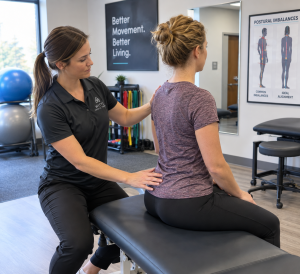
Postural Restoration Institute® concepts offer outpatient physical therapists another way to evaluate the relationship between breathing, posture, and movement. When appropriate, these techniques can complement strengthening, mobility work, balance training, and functional rehabilitation.
At Witte Physical Therapy, our goal is to help patients move better, reduce limitations, and return to the activities that make life meaningful. An individualized approach, one that considers the whole person and uses treatment strategies suited to their needs, can help patients work toward lasting improvements in function and quality of life.
If pain, stiffness, or movement limitations are keeping you from doing what you enjoy, consider scheduling an evaluation with a Witte PT physical therapist to discuss your symptoms and rehabilitation options.