
How Occupational Therapy Can Help If You’re Having Trouble Getting Dressed
August 18, 2026
Getting dressed is something many people take for granted, until it becomes difficult. Whether it’s buttoning a shirt, putting on socks, fastening a bra, or simply choosing weather-appropriate clothing, getting dressed can become frustrating due to injury, illness, surgery, arthritis, neurological conditions, or changes related to aging.
The good news is that occupational therapy (OT) can help you regain confidence and independence with dressing, making your daily routine easier and less stressful.
Why Is Getting Dressed So Challenging?
Dressing requires a surprising combination of physical and cognitive skills, including:
- Balance and coordination
- Strength and endurance
- Flexibility and range of motion
- Fine motor skills for buttons, zippers, and clasps
- Problem-solving and sequencing
- Vision and sensation
When one or more of these abilities are affected, everyday tasks like getting dressed can take longer, become exhausting, or even increase the risk of falls.
How Occupational Therapists Help
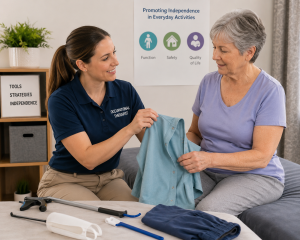
Occupational therapists specialize in helping people complete meaningful daily activities safely and independently. During an evaluation, an OT will identify what is making dressing difficult and develop a personalized treatment plan.
Treatment may include:
– Improving Strength and Mobility
If limited movement or weakness is making it difficult to reach your feet or lift your arms, your OT can guide you through exercises designed to improve strength, flexibility, and range of motion.
– Teaching New Techniques
Sometimes a small change in how you get dressed can make a big difference. Occupational therapists teach energy-saving strategies and one-handed or adaptive dressing techniques that make dressing more manageable.
– Recommending Adaptive Equipment
Simple tools can make dressing much easier. Depending on your needs, your OT may recommend:
- Long-handled shoehorns
- Sock aids
- Dressing sticks
- Button hooks
- Elastic shoelaces
- Zipper pulls
- Reachers for retrieving clothing
These devices reduce the need to bend, stretch, or grip tightly.
– Making Clothing Choices Easier
Your therapist may suggest clothing modifications that improve independence, such as:
- Velcro closures instead of buttons
- Elastic waistbands
- Slip-on shoes
- Adaptive clothing with magnetic closures or easy-access designs
The goal is to help you dress comfortably while maintaining your personal style.
– Improving Safety
If balance is a concern, an occupational therapist can recommend strategies to reduce your risk of falling, including:
- Sitting while dressing
- Organizing clothing within easy reach
- Using stable seating with armrests
- Creating a safer dressing environment
Who Can Benefit?
Occupational therapy can help individuals experiencing dressing difficulties due to:
- Stroke
- Arthritis
- Parkinson’s disease
- Multiple sclerosis
- Joint replacement surgery
- Shoulder injuries
- Hand injuries
- Balance problems
- General weakness or deconditioning
- Aging-related changes
The Benefits of Occupational Therapy
With the right support, many people experience:
- Greater independence
- Increased confidence
- Less frustration during daily routines
- Improved safety
- Better energy conservation
- Enhanced quality of life
Even small improvements in dressing can have a significant impact on your ability to participate in work, family life, hobbies, and community activities.
Don’t Let Dressing Become a Daily Struggle
If getting dressed has become painful, time-consuming, or difficult, you don’t have to face it alone. Occupational therapists are experts in helping people overcome barriers to everyday activities and find practical solutions that fit their lifestyle.
Regaining independence often starts with one simple task. By working with an occupational therapist, you can build the skills, confidence, and strategies needed to start each day feeling more capable and in control.
If you or a loved one is struggling with dressing or other daily activities, consider speaking with an occupational therapist. The right intervention can make everyday routines easier—and help you get back to living life with greater independence.