
How Aquatic Physical Therapy Can Improve Balance
August 11, 2026
Balance is an important part of nearly everything we do, from walking and getting out of a chair to climbing stairs and participating in recreational activities. When balance is impaired, everyday activities can become more difficult, and the risk of falls can increase.
For patients who struggle with balance, aquatic physical therapy can provide a safe and effective environment to improve strength, coordination, stability, and confidence.
What Is Aquatic Physical Therapy?
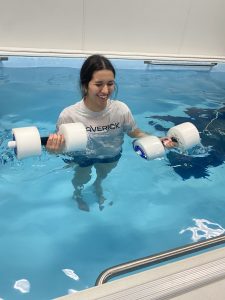
Aquatic physical therapy is rehabilitation performed in a pool under the guidance of a physical therapist. The water provides unique properties that can make exercises easier and safer for patients who may have difficulty performing similar activities on land.
The buoyancy of the water reduces the amount of weight placed on the joints while the resistance of the water challenges the muscles. This combination allows patients to work on movement and balance while reducing the impact and stress placed on the body.
How Does Aquatic Therapy Help Improve Balance?
Provides a Safer Environment for Balance Training
One of the biggest advantages of aquatic therapy is the supportive environment provided by the water. Patients who are afraid of falling or have significant balance deficits may feel more comfortable practicing challenging movements in the pool.
The water can slow movements and provide additional support, allowing patients to work on balance without the same fear of falling that they may experience during land-based exercises.
This increased sense of safety can help patients become more confident as they progress through their rehabilitation.
Improves Lower-Body Strength
Strong muscles are essential for maintaining balance. Weakness in the legs, hips, and core can make it difficult to stabilize the body while standing or walking.
Water provides natural resistance in every direction. As patients walk, step, squat, or perform strengthening exercises in the pool, their muscles must work against the resistance of the water.
Improving lower-body strength can help patients better control their movements and maintain stability during everyday activities.
Challenges the Body’s Stability
Balance exercises are designed to challenge the body’s ability to maintain its center of gravity. The water creates an environment where patients must constantly make small adjustments to remain stable.
A physical therapist can gradually increase the difficulty by having a patient change positions, shift their weight, reach in different directions, step over obstacles, or walk in different directions.
These activities can help improve the body’s ability to respond to changes in balance.
Reduces Joint Stress
For some patients, traditional balance exercises on land may be uncomfortable because of arthritis, joint pain, recent surgery, or other musculoskeletal conditions.
The buoyancy of the water decreases the amount of weight placed on the joints. This can allow patients to perform exercises with less pain and greater ease of movement.
Being able to exercise more comfortably may allow patients to spend more time working on the strength and movement patterns necessary for improved balance.
Improves Walking and Mobility
Balance and walking ability are closely connected. Aquatic therapy can be used to practice walking while incorporating different speeds, directions, and movement patterns.
Patients may practice:
- Forward and backward walking
- Side-stepping
- Turning
- Changing speeds
- Stepping over objects
- Single-leg activities
- Weight shifting
- Getting in and out of a seated position
These exercises can help improve coordination and control while preparing patients for the demands of walking on land.
Builds Confidence
Fear of falling can become a significant barrier to recovery. Patients who have experienced a fall may begin avoiding activities because they are afraid of falling again. Unfortunately, avoiding activity can contribute to further weakness and loss of balance.
Aquatic therapy provides an opportunity to practice movement in a controlled environment. As patients become stronger and more comfortable with movement, their confidence can improve.
That confidence can then carry over into everyday activities outside of the pool.
Who Can Benefit From Aquatic Balance Training?
Aquatic physical therapy may be beneficial for many individuals experiencing balance or mobility difficulties. Depending on the patient’s condition and goals, aquatic therapy may be incorporated into rehabilitation for people recovering from:
- Orthopedic injuries or surgeries
- Joint replacements
- Neurological conditions
- Balance and coordination disorders
- Falls or repeated falls
- General weakness or deconditioning
- Arthritis
- Chronic pain
- Gait and mobility problems
A physical therapist can evaluate a patient’s individual needs and determine whether aquatic therapy is an appropriate part of their rehabilitation program.
Aquatic Therapy Is More Than Just Exercising in a Pool
While exercising in water can be enjoyable, aquatic physical therapy is much more than simply swimming or performing general exercises in a pool. A physical therapist can develop a specific program designed around the patient’s impairments, functional limitations, and goals.
The therapist may gradually progress exercises as the patient’s strength, balance, coordination, and confidence improve. Eventually, aquatic exercises can be combined with land-based activities to help patients transfer their improvements to everyday life.
Improving Balance Can Improve Quality of Life
Good balance allows us to move through our day with greater confidence and independence. Whether it is walking through the house, getting in and out of a car, navigating stairs, or participating in favorite activities, balance plays an important role in maintaining an active lifestyle.
For patients who have difficulty with balance or feel unsteady on their feet, aquatic physical therapy can provide a supportive environment to begin rebuilding strength, stability, and confidence.
If you or someone you know is struggling with balance, talk with a physical therapist to determine whether aquatic physical therapy could be an appropriate part of your rehabilitation plan.